
Key takeaways
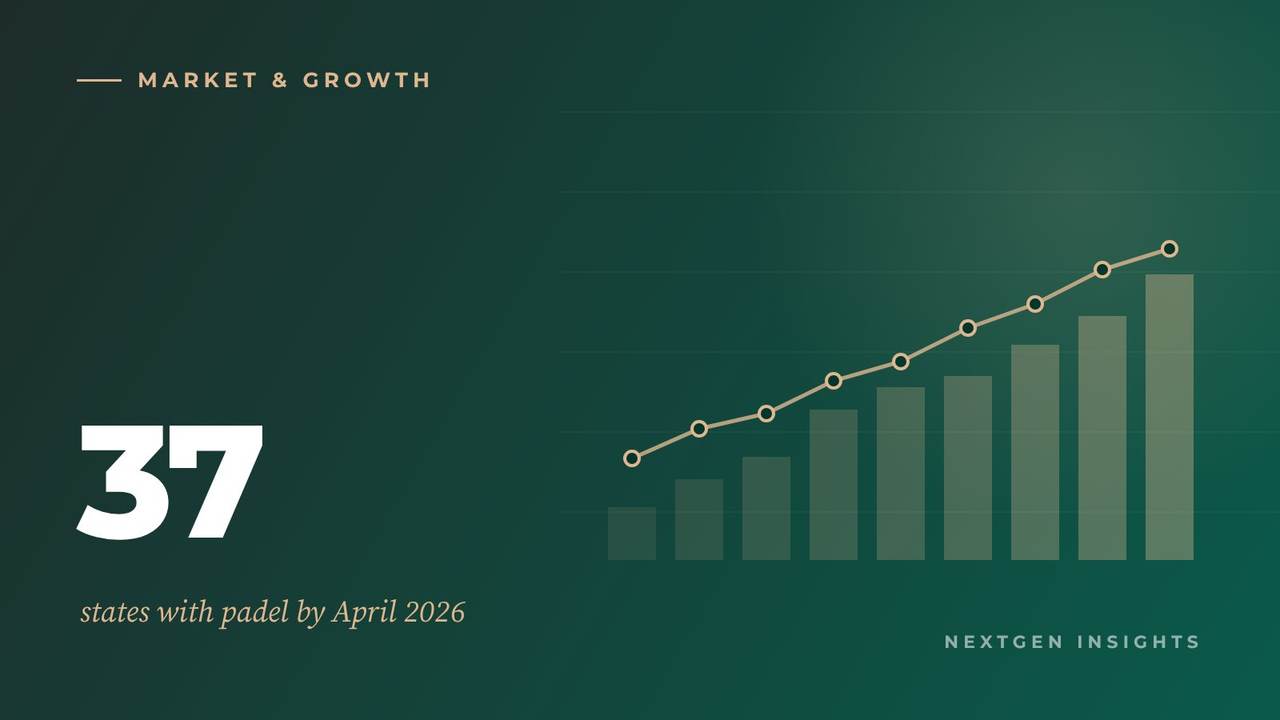
- Padel is in 37 U.S. states (April 2026), but supply is concentrated: in one mid-2026 directory, Florida had 88 clubs (440+ courts) and Texas about 60 clubs (roughly 260 courts), followed by California and New York.
- “Hot” does not mean “right.” A market can be the best in the country and still be oversupplied in the specific neighborhood you are considering.
- Pick markets with a scorecard: demand drivers, existing supply, real estate economics, regulatory friction and fit with your concept. Then test the shortlist at catchment level.
- Learn from Chile and the Nordics: markets can go from boom to retrenchment quickly when supply outruns players.
The question “Which city should we build in?” is where many padel projects start and where many mistakes begin. Headlines point to Miami, Austin or Los Angeles, but a good market for padel in general is not automatically a good market for a particular club. This article provides a way to compare markets rigorously and then drill down to the catchment.
Start with the map: where padel is today
Court and club counts vary by source, date and definition, so use them as approximations. Padel Browser’s directory in June 2026 showed Florida with 88 clubs and more than 440 courts, Texas with 60 clubs and about 260 courts, California with 37 clubs and New York with 23 clubs. Another directory in September 2026 counted 343-plus clubs and 1,401 courts across 39 states. Playtomic and PwC’s Strategy& report that 2025 growth was concentrated in Florida, Texas, California and select East Coast cities, with about 250 clubs and 330 courts added nationally that year. About 39% of U.S. courts are indoor (an industry estimate).
These are leading indicators, not answers. They show where early operators have gone, which is useful for two reasons: proof of demand and evidence of competition.
A six-factor market scorecard
| Factor | What to measure | Where to look |
|---|---|---|
| 1. Demand drivers | Population and household growth, income, age mix (padel skews to Gen Z and Millennials in racquet sports), expatriate and Latin American communities who know the sport, existing tennis and pickleball participation | Census and ACS data, local tennis and pickleball counts, SFIA and USPA reports |
| 2. Existing supply | Courts and clubs within the drive time, their pricing, hours and booking availability, and the pipeline of announced clubs | Booking apps, directories, local planning filings, site visits |
| 3. Real estate economics | Rents by property type (retail, flex, industrial), vacancy, availability of suitable buildings or land | Broker reports, listings, local brokers |
| 4. Climate and format fit | Playable hours outdoors, need for indoor or covered courts | Weather data, operator experience |
| 5. Regulatory friction | Zoning use categories, noise rules, parking requirements, permit timelines | Municipal code, pre-application meetings |
| 6. Ecosystem | Coaches and operators available, sponsors, hotels and clubs, local events and leagues | USPA calendar, local networks |
Score each factor from 1 to 5, weight it according to your concept (a resort amenity weighs climate and tourism more; a commercial club weighs population density and rents more) and rank the candidates.
Demand: look beyond the headline population
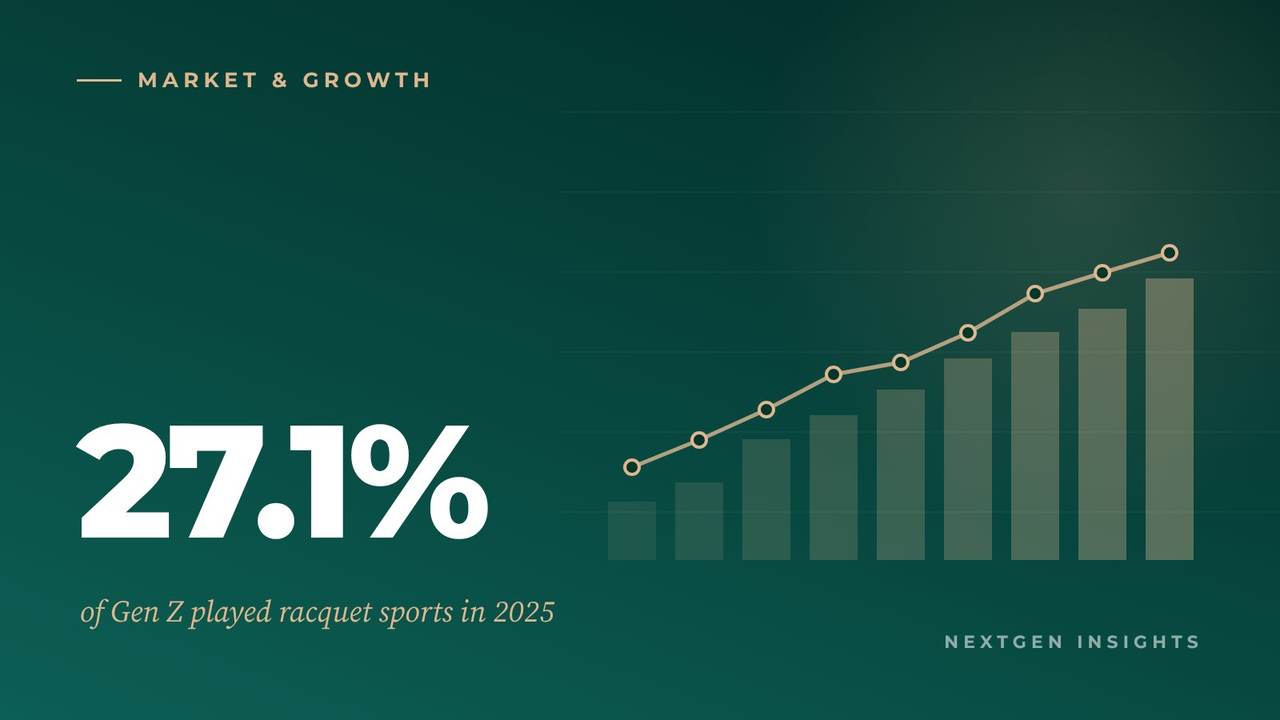
Padel clubs live on repeat play by regulars. In a market, ask how many people within 15 to 20 minutes’ drive of the site match the profile of a regular player: income, age and attitude toward sport and social activity. Racquet-sports participation rose from 13.9% to 20.6% of Americans between 2020 and 2025, with Gen Z at 27.1% and Millennials at 22.7%. High-income, young and family-rich suburbs and urban neighborhoods are the core, but the premium pricing typical of U.S. padel means affordability is a filter.
Supply: measure saturation honestly
The question is not how many clubs a city has but how many courts per thousand of your target customers and how full they are. Check booking apps at different times: if prime-time slots at nearby clubs are booked days ahead, demand exceeds supply; if evenings show open slots, you may be looking at a thin market. Track the pipeline as well: a rival opening 10 courts six months before you changes your pro forma.
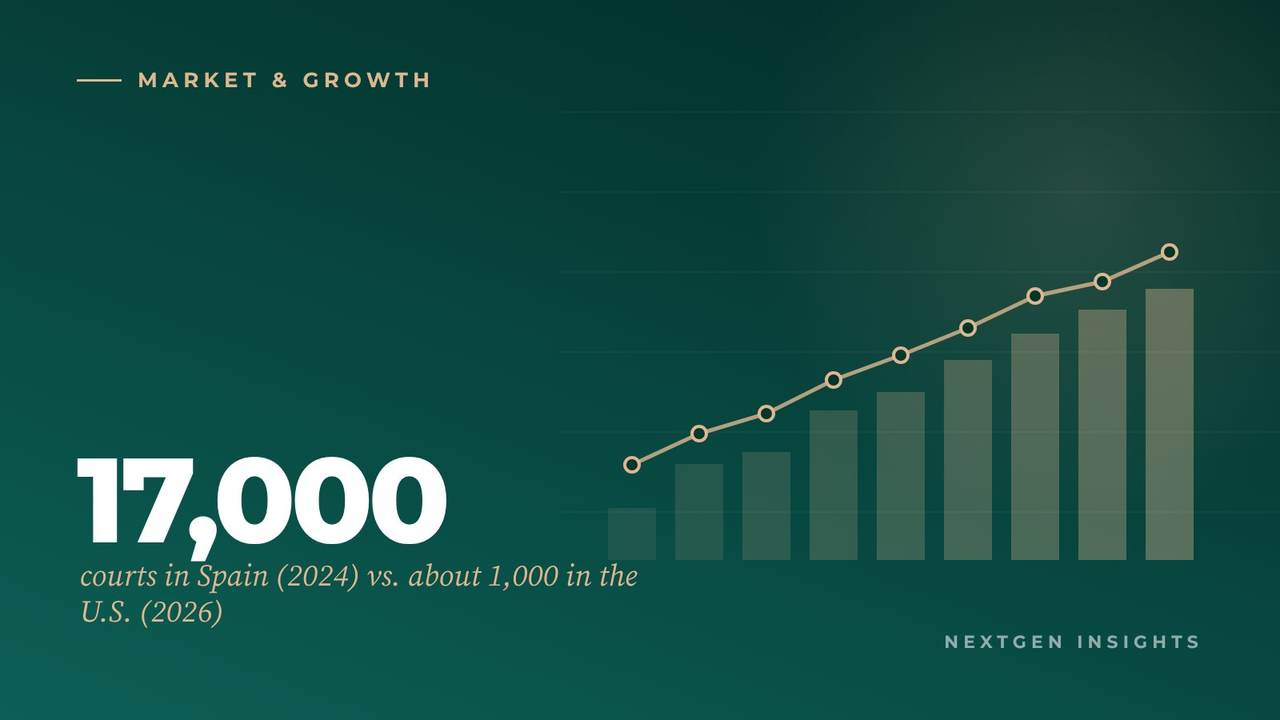
Global precedent is a warning. Playtomic’s report classifies the U.S. among “Diamond in the Rough” markets with fewer than one court per 100,000 people, but it also documents Chile’s retrenchment: clubs rose from 148 to 198 and courts from 570 to 788 between 2022 and 2023; major operators’ reservations later fell by 27% month on month during January to November 2024 and more than 80 clubs closed. Sweden, Finland and Chile show “post-boom” dynamics, with density of roughly 12 to 33 courts per 100,000 people and flat or negative growth. A U.S. neighborhood can reach saturation long before the U.S. reaches Scandinavian density.
Real estate: where will the club actually fit?
Padel needs more specific buildings and land than most small-box retail. Indoor courts require clear height of about 7 meters, large column-free spans and strong electrical service; outdoor courts need space, drainage and noise buffers. Playtomic identifies high commercial rents and complex zoning among the structural barriers in the U.S. Compare effective occupancy cost per court in each market, not just rent per square foot. See our commercial real estate guide for the property side.
Regulation: the hidden market variable
Two cities with identical demand can offer different realities. In one, a padel club is a by-right use in industrial zones and permits take weeks; in another, it needs a conditional use permit, a public hearing and a noise study. Ask the planning department early and talk to operators who have been through the process. The zoning guide explains what to expect.
From market to catchment
Once you have a shortlist of two or three markets, move to specific sites. Draw 10-, 15- and 20-minute drive-time catchments around each candidate. Estimate the number of target households, compare it with existing courts and model revenue under conservative, base and optimistic utilization. A good market with a poor site is a poor project; a decent market with an excellent site can work.
Other angles: hotels, resorts and mixed-use
Some of the strongest early padel projects are not stand-alone clubs. A review of U.S. resorts and hotels found 19 venues with padel and 33 courts in 2026, in states from California and Florida to Colorado, New York, South Carolina and Virginia. Where the customer is a guest, a resident or a member, demand comes from the host property rather than the surrounding neighborhood. That changes the market question entirely: the market is the property’s audience. See our article on resorts, hotels and mixed-use.
A simple decision rule
- Pick three markets with strong demand drivers.
- Eliminate those with severe supply saturation or prohibitive regulation.
- Compare the remaining on real-estate economics and ecosystem.
- Run catchment analyses on two or three sites in the winner.
- Commit capital only when the site-level numbers work in the conservative case.
Our U.S. market entry advisory and feasibility studies apply this process for international operators and investors entering the U.S.
Sources
- Padel Browser: Padel growth in the United States, 2026 (state counts, indoor share).
- Padel Courts Finder: State of U.S. padel, 2026 (directory counts as of September 2026).
- PADEL1969: Global Padel Report 2026 summary (market archetypes, Chile data, barriers).
- Club + Resort Business: Playtomic 2026 Global Padel Report.
- USPA: Padel surpasses one million players (racquet-sports participation by generation).
- Padel Browser: Padel at U.S. resorts and hotels, 2026.
Directory counts differ in scope and date and are not directly comparable.