
Ideias-chave
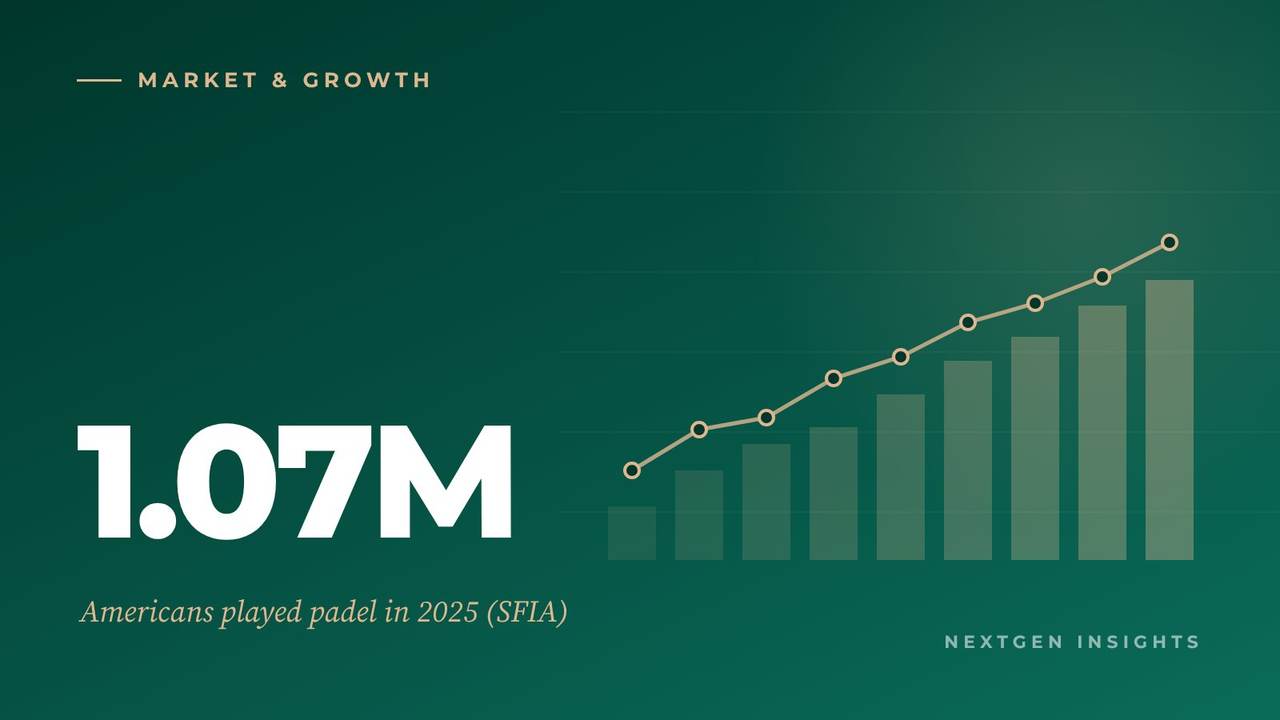
- Sobre nós 1.07 million Americans played padel in 2025; 835,000 played one to seven times and 238,000 played eight or more times (SFIA).
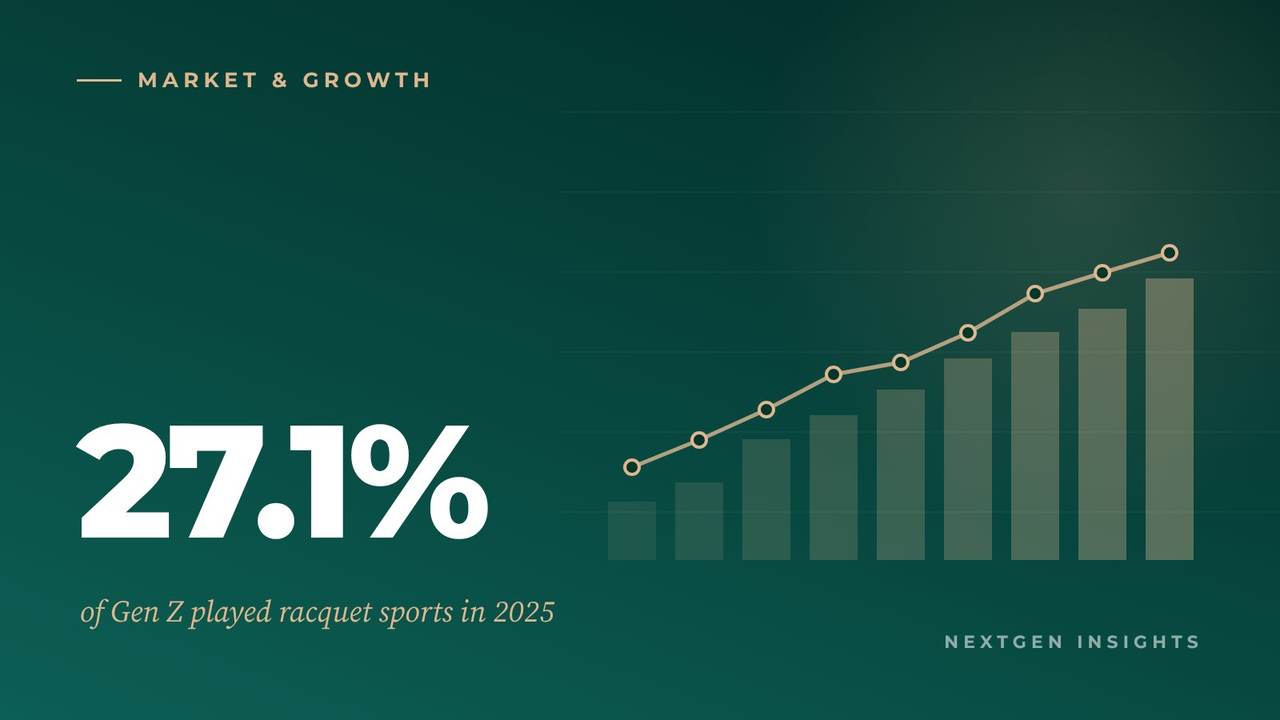
- Racquet sports skew young: 27.1% of Gen Z and 22.7% of Millennials took part in 2025, versus 20.6% of the overall population.
- Padel’s social, doubles-only format and premium positioning attract friends, couples, colleagues and families, and a high share of former tennis, squash and pickleball players.
- Spain’s federation data (36% women, over 12,000 players under 19) hint at where U.S. participation can broaden as the sport matures.
- No public dataset yet gives a rigorous U.S. padel player profile. Operators should build their own, starting with booking data.
To size a market, you need to know who the customer is. For padel in the United States, public data is thin because national tracking began only in 2025, but combining SFIA data, federation figures, market reports and operator experience gives a useful picture. This article shows what is known, what is not and how a club can build its own player profile.
What national data tells us
SFIA’s 2026 Topline Participation Report, based on a survey of 18,000 Americans aged six and older, counted 1,073,000 padel players in 2025. By frequency, 835,000 played one to seven times and 238,000 played eight or more times. SFIA expanded its tracking from 124 to 126 activities in 2025, adding padel and disc golf. This is the first national baseline; we do not yet know the age, income or gender splits for padel specifically.
Source: SFIA 2026 Topline Participation Report, as published by the USPA (April 13, 2026). Total: 1,073,000 players aged 6+.
The wider racquet-sports data gives context. Racquet sports participation rose from 13.9% of the U.S. population in 2020 to 20.6% in 2025; Gen Z reached 27.1% and Millennials 22.7%. Within pickleball, the 18-to-34 group was the largest age cohort, at about 29% of players in a 2023 industry summary. Tennis counted 27.3 million players in 2025 with 4.9 million first-time players and growth among women (1.1 million more, up 10%), Black players (450,000 more, up 14%), Hispanic players (550,000 more, up 12%) and Asian and Pacific Islander players (260,000 more, up 10%), according to USTA data. These are tennis, not padel, figures, but they describe the pool from which padel draws its players.
Evidence from Spain
Spain is the best-documented padel population. In 2024 the Spanish federation issued 109,040 licenses, a record; about 40,000 holders (36%) were women, up 11% on 2023, and more than 12,000 were under 19. A separate survey estimates that 12.7% of Spain’s population plays. In a mature market the player base is broad across ages and genders, with growth strongest among women and juniors. The U.S. is far earlier on that curve.
Five player segments we see in U.S. clubs
The following segments are drawn from operating experience rather than national statistics. Validate them against your own booking data.
| Segment | Motivation | What they need from a club |
|---|---|---|
| Social young professionals (20s–30s) | Fun, fitness and a social outlet, often after pickleball or tennis | Evening and weekend slots, open matches, social events, strong app |
| Former racquet players (tennis, squash, racquetball) | Competition and technical challenge, easier on the body than some alternatives | Levels-based leagues, coaching, tournaments |
| Couples and friend groups | A shared activity that works for mixed levels | Mixed events, easy group booking, food and beverage |
| Families and juniors | Safe, social sport that works across ages | Junior programs, family times, coaching |
| Corporate and community groups | Team building and client entertainment | Private events, packages, hospitality |
Willingness to pay
Playtomic’s 2026 report lists the U.S. average booking price at about €92 (roughly $100) per booking session, the highest of any country it tracks. The sources we reviewed do not say whether that figure is per court or per player, so treat it as directional. Resort and country-club pricing varies widely: one review found hourly court rates from $32 for members at a Virginia sports club to $190 at an Aspen resort. The implication is that the U.S. padel customer is, on average, comfortable with premium pricing but also price-aware, which makes value, community and experience the differentiators.
Beginners are the majority of the funnel
Because 835,000 of the 1.07 million players played fewer than eight times in 2025, most U.S. padel customers are beginners or occasional players. Clubs that treat the first experience as a priority, with intro sessions, a host on court, equipment included and a clear next step, convert more of them into regulars. See our guide on building community.
Gaps to watch
- Women and juniors. Spain’s data suggests they are growth segments; programs designed for them can expand your base.
- Diversity of audience. The USTA’s tennis data shows fast growth among Hispanic, Black and Asian players; clubs that reflect their communities widen their funnel.
- Older adults. Padel’s smaller court and doubles format suit older players; most clubs underserve this segment.
How to build your own player profile
- Capture data at booking: postcode, level, how they heard about you and which sports they have played.
- Survey new players after their first and third visits.
- Segment by behavior: frequency, time slots, group size, spend.
- Compare with your catchment demographics to see who is missing.
- Adapt programming and marketing to the segments with the best retention and lifetime value.
Our marketing and brand advisory and commercial strategy services start with this kind of customer analysis.
Fontes
- USPA: Padel surpasses one million players (SFIA 2026 Topline Participation Report; racquet-sports participation by generation).
- NBC Sports: U.S. tennis participation at a new high of 27.3 million (USTA).
- FIP: Padel in Spain, growth in courts and player licenses in 2024.
- NAR REALTOR Magazine: Pickleball courts serve an ace for vacant malls (2023) (age mix of pickleball players).
- Padel Browser: Padel growth in the United States, 2026 (average booking price).
- Padel Browser: Padel at U.S. resorts and hotels, 2026 (hourly rates).
Player segments and the profile-building method are our professional guidance, not published statistics.