
Ideas clave
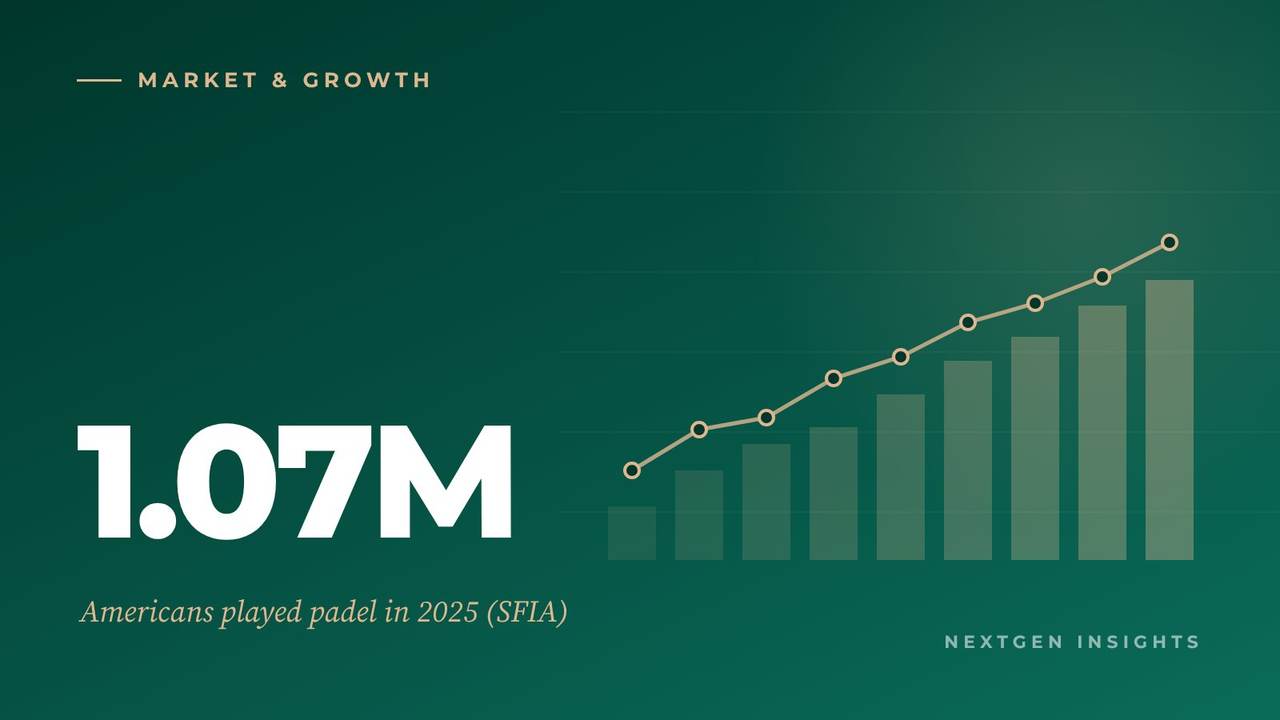
- SFIA counted about 1.07 million Americans who played padel in 2025, its first year of tracking the sport. Only 238,000 played eight or more times, so the core audience is still small.
- Racquet sports as a whole are growing: participation rose from 13.9% of the U.S. population in 2020 to 20.6% in 2025.
- The U.S. had its 1,000th padel court in April 2026, compared with roughly 17,000 in Spain at the end of 2024. Supply, not interest, is the binding constraint in most markets.
- Growth rates are high because the base is small. The realistic question for an investor is not “is padel growing?” but “is it growing here, at a rate and price this site can capture?”
Padel arrived in the United States as a curiosity and is becoming a commercial category. The sport itself is simple: a doubles game played on a 10 × 20 meter court enclosed by glass and mesh, with walls in play. What makes it interesting to developers and operators is not novelty but a combination of demand signals, a structural supply shortage and a business model that works with premium pricing. This article separates what the data supports from what the headlines imply.
What the participation data says
In April 2026 the Sports & Fitness Industry Association (SFIA) published its Topline Participation Report, which for the first time included padel. Based on a nationally representative survey of 18,000 Americans aged six and older, SFIA reported 1,073,000 padel players in 2025. Of these, 835,000 played between one and seven times and 238,000 played eight or more times.
Source: SFIA 2026 Topline Participation Report, as published by the USPA (April 13, 2026). Total: 1,073,000 players aged 6+.
Two readings are both correct. The first is that padel has crossed one million participants in a few years from a standing start. The second is that the habitual base is still small: fewer than a quarter of those players are regulars. For an operator, regular players are the customer. Casual players are the funnel.
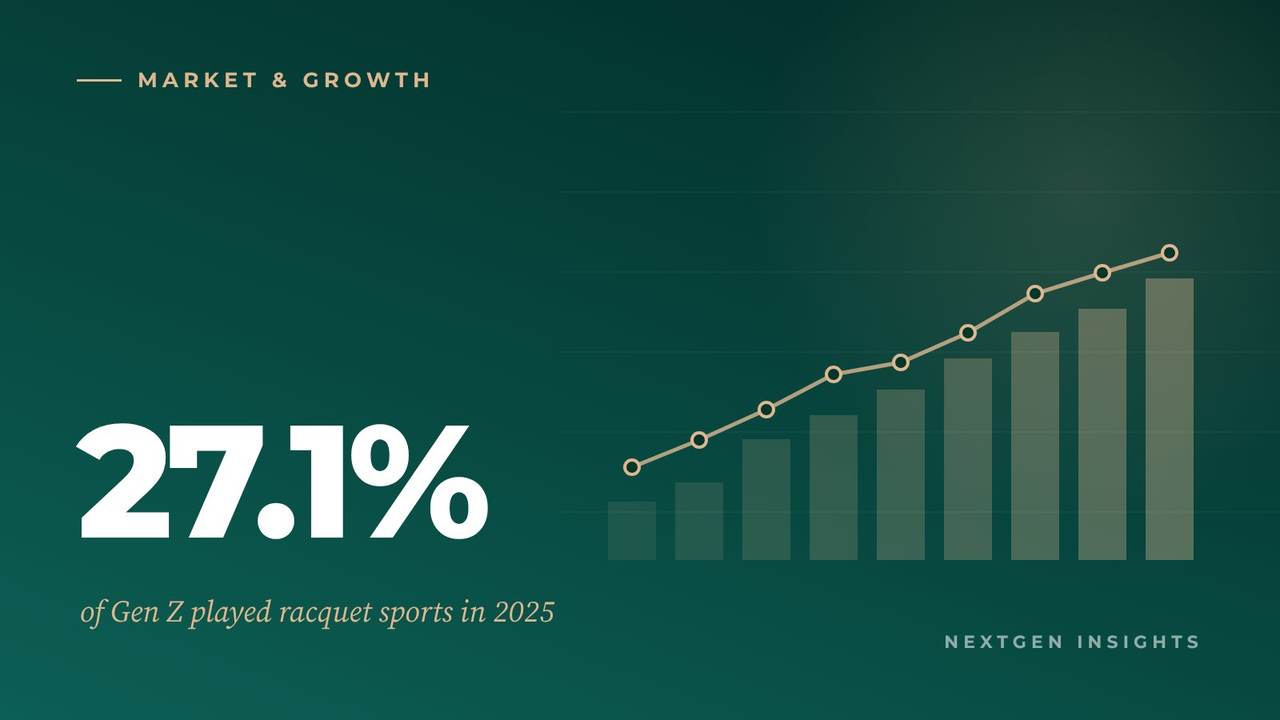
The broader context is favorable. SFIA data published by the U.S. Padel Association (USPA) shows racquet-sport participation rising from 13.9% of the population in 2020 to 20.6% in 2025, with Gen Z at 27.1% and Millennials at 22.7%. Tennis reached a record 27.3 million players in 2025, according to the USTA, its sixth consecutive year of growth. Pickleball reached about 24.3 million in SFIA’s data. Padel is entering a country that has already been taught to play racquet sports socially.
Source: SFIA data as published by the USPA (April 2026). Gen Z reached 27.1% and Millennials 22.7% in 2025.
The supply side: a thin court base
Playtomic and PwC’s Strategy& practice describe the U.S. in their 2026 Global Padel Report as a “Diamond in the Rough”: an early-stage market with significant long-term upside. The report counts about 250 new clubs and 330 new courts added in the U.S. in 2025, concentrated in Florida, Texas, California and select East Coast cities. Worldwide, the same report counts about 58,300 courts, nearly 21,000 clubs and 19.4 million players, with almost 8,000 courts added in 2025 alone.
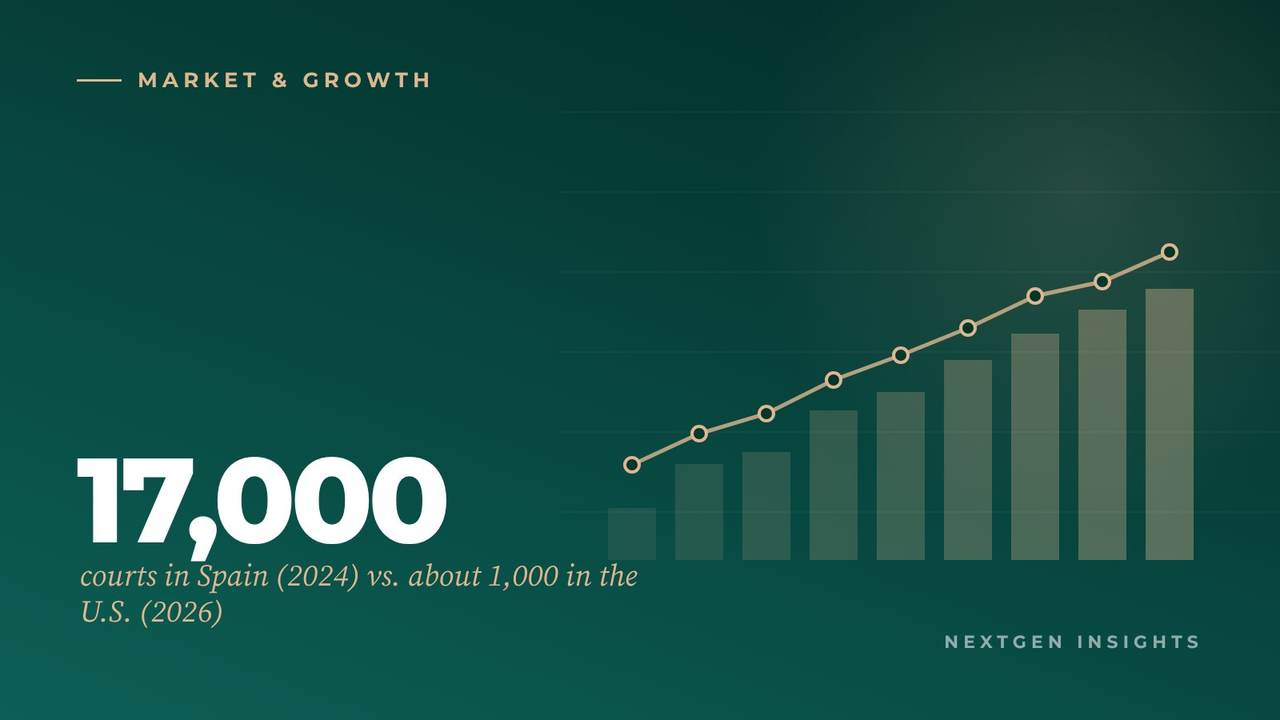
Spain gives a sense of what a mature padel market looks like. The Spanish federation reported almost 4,500 clubs and about 17,000 courts at the end of 2024, roughly one court for every 2,800 people. The U.S. passed 1,000 courts in April 2026, which on our arithmetic is about one court per 340,000 people.
Sources: Real Federación Española de Pádel via FIP (Spain, ~17,000 courts, 2024); USPA / The Padel Paper (U.S. 1,000th court, April 2026). Spain has roughly one court per 2,800 people; the U.S. has roughly one per 340,000 (our calculation, using a U.S. population of about 340 million).
No one expects the U.S. to replicate Spain’s density, because Spain’s padel culture dates back decades. But the gap explains why well-located clubs in early-adopter metros can fill courts at premium prices. Playtomic reports the U.S. has the highest average booking price of any country it tracks, about €92 (roughly $100) per booking session.
Where the growth is concentrated
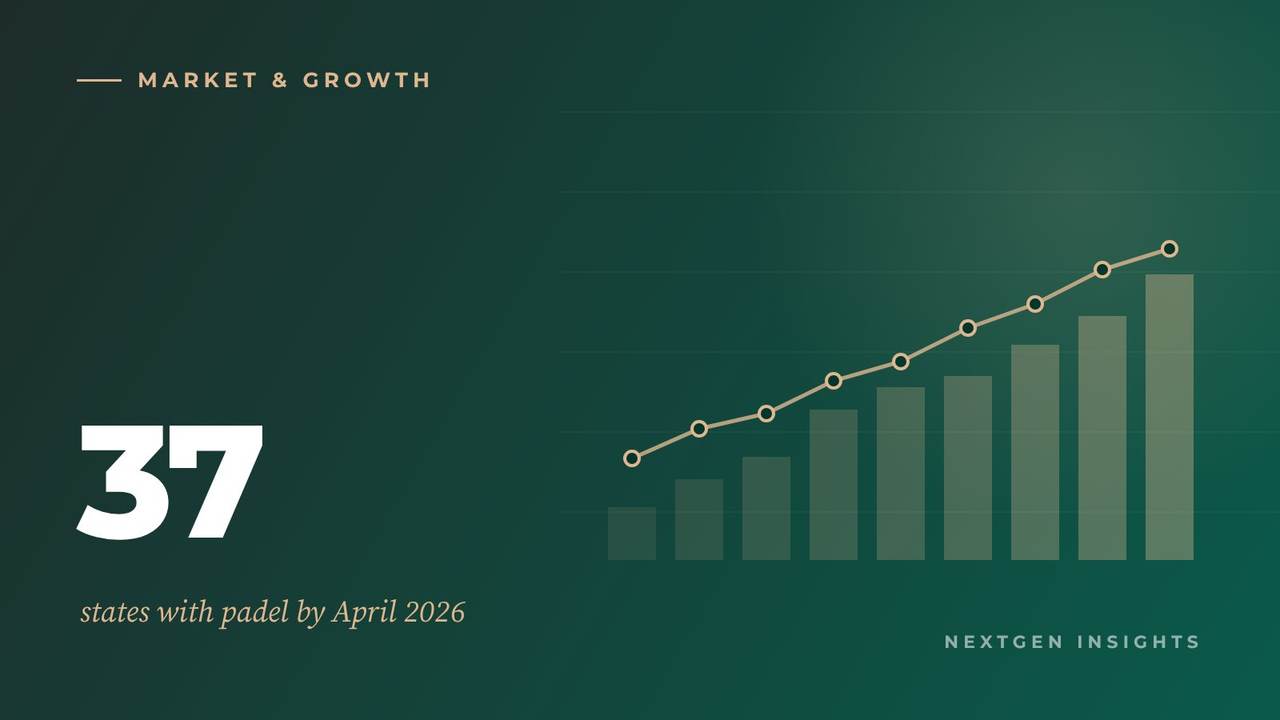
Court and club counts differ by source and date, so treat any single number as approximate. Directory-based counts in mid-2026 show Florida with the most clubs (88 clubs and more than 440 courts in one directory), followed by Texas (about 60 clubs and roughly 260 courts), California and New York. Industry benchmarks put padel in 31 states in September 2025 and 37 states by April 2026.
The pattern is familiar from other leisure formats: coastal and Sun Belt metros with high household incomes, a large expatriate or Latin American population, warm climates for outdoor play and a pipeline of hotels and private clubs willing to try something new.
Why institutions are paying attention
- Capital is arriving. The Pro Padel League announced a $15 million Series A in March 2026 on top of a $10 million seed round a year earlier, and runs 10 franchises across the U.S., Canada and Mexico.
- Real estate is following. The Playtomic–Strategy& report notes that JLL and CBRE have created dedicated sports and entertainment real estate practices, and that padel courts are becoming standard amenities in residential, hospitality and mixed-use projects.
- Pickleball is a gateway, not a rival. The report describes pickleball as an adjacent entry point to padel rather than a competitor. Pickleball players already understand racquet-and-paddle social play.
What could slow it down
The same report identifies four structural barriers to scale in the U.S.: complex zoning and permitting, high commercial rents, high logistics costs for importing equipment (courts are typically manufactured in Europe) and uneven awareness outside core hubs. Add to these the cost of building: an indoor court including its building shell is a materially larger investment than a pickleball court.
There is also precedent for overbuilding. Chile’s padel clubs rose from 148 to 198 between 2022 and 2023, and over the following year reservations at major operators fell sharply while more than 80 clubs closed, according to the Playtomic report. Growth that outruns demand in a given catchment can reverse locally even while the sport grows nationally. That is exactly the distinction a feasibility study exists to draw.
How to read the projections
Forecasts for the U.S. vary widely. The USPA has cited targets of 10,000 courts and 10 million players by 2030 in one release and higher figures in other statements; a 2025 academic and industry study from Syracuse University’s Newhouse School and Padel 22 suggested up to 30,000 courts. These are aspirations from organizations with an interest in growth, not forecasts anchored to individual local markets. We use them as a ceiling for the national story, never as an input to a pro forma.
What this means for a developer or investor
- Demand is real but local. Build the case from the catchment, not from national headlines.
- Early supply scarcity is a window, not a guarantee. Competitors, including hotel and country-club conversions, are arriving.
- Premium pricing is part of the model. Test whether your catchment supports it, because high rents and construction costs depend on it.
- Plan for the regular player. Programming, leagues and community convert the one-time player into the member.
Fuentes
- USPA: Padel surpasses one million players in the United States (SFIA 2026 Topline Participation Report, April 13, 2026).
- Club + Resort Business: Playtomic releases 2026 Global Padel Report.
- PADEL1969: Global Padel Report 2026 summary (Chile and regional archetype data).
- FIP: Padel in Spain, growth in courts and player licenses in 2024.
- Padel Browser: Padel growth in the United States, 2026 (state-level directory counts, average booking price).
- The Padel Paper: USA reaches 1,000 padel courts.
- NBC Sports: U.S. tennis participation reaches 27.3 million in 2025 (USTA).
- The Kitchen: 24.3 million Americans played pickleball in 2025 (SFIA).
- NSGA: Pro Padel League announces Series A.
- Padel Courts Finder: State of U.S. padel, 2026 (projections by USPA and Syracuse/Padel 22).