
Ideas clave
- Playtomic names complex zoning and permitting as one of four structural barriers to padel’s growth in the U.S. (alongside high commercial rents, import logistics and uneven awareness).
- Padel is a new use for most U.S. codes. Expect to be classified under a recreation, indoor sports or commercial entertainment category, and ask early whether your site needs a conditional use permit.
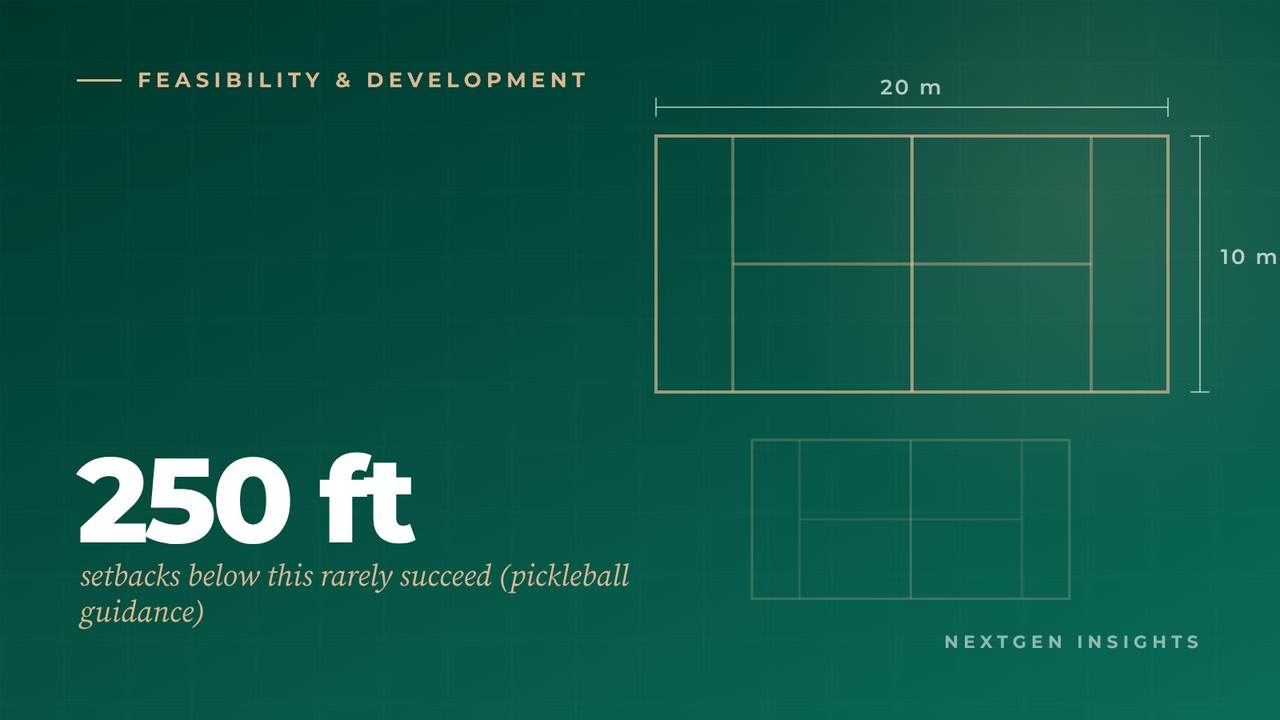
- Noise is the main neighbor issue for outdoor courts. Planning guidance developed for pickleball suggests that setbacks under about 250 feet have low success rates, even with mitigation. Verify the equivalent for padel locally.
- Permits can add weeks or months to a project. Start the zoning conversation before you sign a lease or purchase agreement, and make approvals a condition.
Many padel projects that look attractive on a spreadsheet stall at the planning counter. Zoning and permitting decide whether a site can host courts at all, how long it takes and how much it costs. They are also where a good advisor saves the most money. This article explains the issues, using public planning research on a related sport, pickleball, to illustrate how noise shapes approvals. It is general information, not legal advice; always confirm requirements with the local authority and your counsel.
Why padel meets friction
- It is new. Many codes have no “padel” use. Staff must analogize to tennis, racquet clubs, indoor recreation or commercial entertainment, and different staff may analogize differently.
- It needs structures. Glass-and-steel enclosures, lighting poles and sometimes roofs trigger building, structural and electrical permits.
- It is social and loud. Ball impact on glass and voices at night create noise and light spill concerns for neighbors.
- It brings traffic and parking. Peak evenings concentrate arrivals and departures.
The approvals checklist
| Area | Questions to ask |
|---|---|
| Zoning use | Is a racquet club or indoor recreation use permitted by right, conditional or prohibited in this district? Is outdoor recreation treated differently from indoor? |
| Conditional use / special permit | Is a public hearing needed? Who must be notified? What is the typical timeline and success rate? |
| Setbacks and buffers | Required distances from property lines and residential zones for courts, structures and lighting. |
| Height | Limits on structure, pole and enclosure heights (indoor courts need about 7 m of clear height inside). |
| Noise | Noise ordinance limits, hours of operation, measurement methods, and whether impulse noise is treated differently. |
| Lighting | Light-spill limits, dark-sky rules and curfews for outdoor lighting. |
| Parking and traffic | Required spaces per court or per square foot and shared-parking options. |
| Building and fire code | Occupancy classification, structural design for glass and roofs, fire protection, accessibility (ADA). |
| Stormwater and site plan | Impervious-surface limits, drainage and landscape requirements. |
| Signage and alcohol | If you plan a branded façade, F&B or an alcohol license. |
Noise: lessons from pickleball planning
Noise is the best-documented land-use conflict in racquet sports. The American Planning Association’s Planning magazine (November 2025) summarizes the pickleball problem, and its framework is a useful template for any outdoor racquet use:
- Traditional noise ordinances rely on average A-weighted decibel limits, which suit steady noise and miss sharp, repetitive “pops.” Residents can be disturbed even when readings are below legal thresholds. One pickleball strike can be about 20 dB louder than a tennis strike, and a court can see up to 900 hits an hour.
- The recommended approach is three-tier zoning: a prohibited zone closest to homes, a conditional use zone in the middle (courts allowed with mitigation and notice) and a by-right zone far from homes. Sound can carry about 1,000 feet, but serious conflict is unlikely beyond roughly 800 feet.
- Setbacks of under about 250 feet have low success rates even with barriers, quieter equipment and limited hours; setbacks of 250, 350 or 500 feet still need one or more mitigation measures.
- Mitigation options include enclosed buildings (which solve the noise problem), distance, barriers (10-foot panels help, though sound can pass over them to upper floors and they are costly), quieter equipment and restricted hours.
Padel’s sound is different, and standards for padel are less developed. Even so, expect planners and neighbors to apply a similar lens. For outdoor courts near housing, acoustic design (court orientation, wall materials, buffers and landscaping), hours of operation and a community engagement plan are as important as the permit application.
Strategies that work
- Screen sites before you fall in love with them. Check zoning, setbacks and nearby residential uses on day one.
- Hold a pre-application meeting. Ask staff how they would classify the use and what approvals are needed. Get it in writing when possible.
- Make permits a condition. Lease or purchase agreements should be contingent on approvals, with enough time and the right to terminate. See lease negotiation.
- Prefer sites with existing entitlements. Industrial, flex or existing recreation properties often present fewer neighbor conflicts than greenfield sites next to homes.
- Design for neighbors. Acoustic studies, buffers, hours and light control reduce objections and speed approvals.
- Engage the community early. Open days, a point of contact and a good-neighbor policy often change the tone of a hearing.
- Use local expertise. A local land-use attorney or architect who knows the board is worth more than a generic checklist.
Timelines and risk
Construction itself is quick. Padel Browser cites about four to eight weeks to assemble courts after materials arrive, and notes that permitting “can add weeks or months on top.” In pickleball retail conversions, one operator told the National Association of Realtors that securing construction approval can take at least 24 months in some cases. Timelines vary enormously by jurisdiction. In your pro forma, carry rent and carrying costs through a realistic approvals period and model a delay case.
Beyond zoning: other approvals
- Insurance and liability. Sports facilities need general liability coverage, participant waivers and, for instruction, professional liability. See our guide on legal structure.
- Alcohol and food licensing if you serve beverages or food.
- Employment compliance for coaches and staff.
- Accessibility. ADA requirements apply to public accommodations.
When indoor is the answer
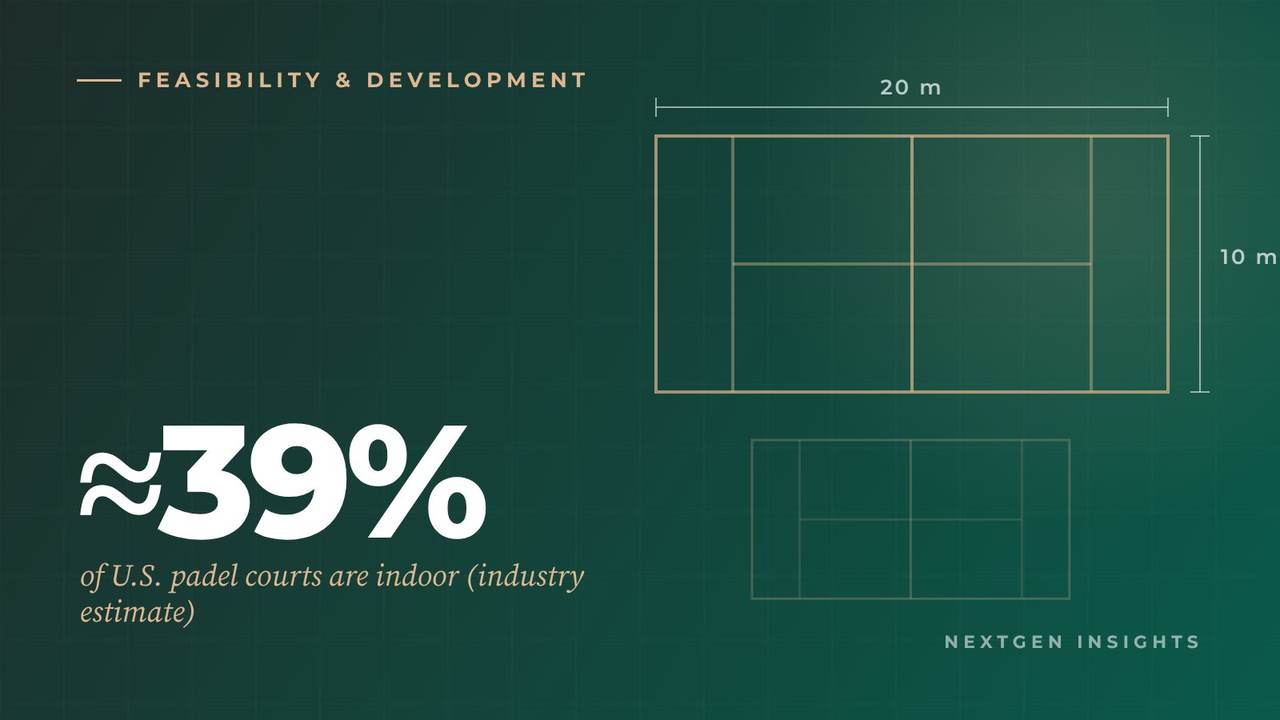
If a site is near housing, an enclosed building often resolves noise and lighting concerns, which is one reason indoor courts account for about 39% of U.S. courts (an industry estimate). The trade-off is higher capital and a building that meets height and fire requirements. See choosing a format.
Our site selection and real estate advisory and development advisory include entitlement strategy and coordination with local counsel and consultants.
Fuentes
- American Planning Association, Planning magazine: Why the pop-pop-pop of pickleball needs a zoning solution (November 2025).
- PADEL1969: Global Padel Report 2026 summary (U.S. structural barriers).
- Padel Browser: How much does it cost to build a padel court? (2026) (assembly time; permitting note).
- NAR REALTOR Magazine: Pickleball courts serve an ace for vacant malls (2023).
- Sports Venue Calculator: Padel court construction cost guide (2026) (indoor clear height).
- Padel Browser: Padel growth in the United States, 2026 (indoor share).
The noise research summarized here concerns pickleball; it is used as an analogy and should not be read as a padel-specific standard. This article is general information, not legal advice.