
Ideas clave
- Most expensive problems are decided before opening day: site choice, budget scope, concept fit, lease terms and the operating plan.
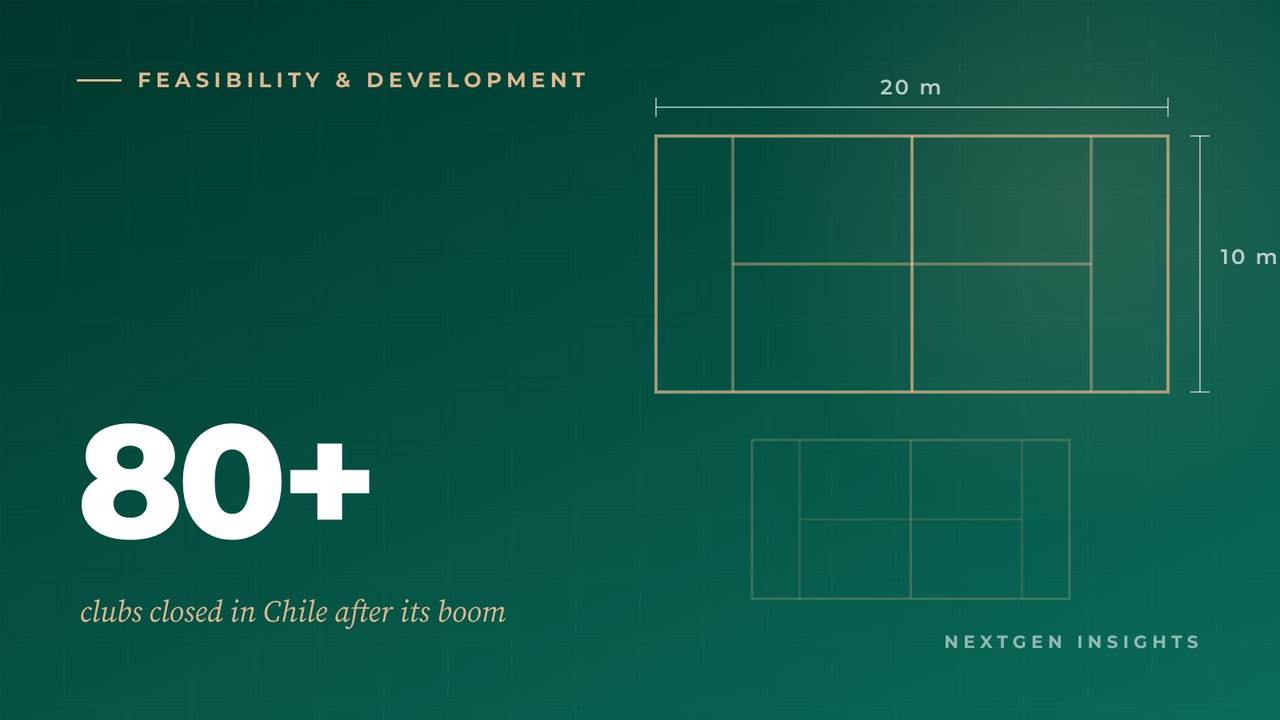
- Chile is the cautionary tale: clubs rose from 148 to 198 and courts from 570 to 788 between 2022 and 2023, then reservations at major operators fell sharply and over 80 clubs closed.
- The gap between good and poor operators is large: top clubs earn about five times the booking revenue per court of bottom clubs in the same markets.
- Nine mistakes recur. Each has a cheap early fix and an expensive late one.
Most of the costly problems in a new padel club were decided months before the doors opened. They are rarely dramatic; they are small assumptions that nobody challenged. Here are the nine we see most often, with the evidence and what to do about each.
1. Choosing the site before testing it
A good-looking building or a generous landlord is not a feasibility study. Sites are often chosen first and justified later. Test the market, zoning and the physical requirements of the sport (court footprint, about 7 meters of clear height indoors, power, drainage, parking) before committing, and keep the right to walk away until approvals are in. Fix: screen sites against a checklist; make permits a lease condition. See zoning, permits and noise.
2. Underestimating the full budget
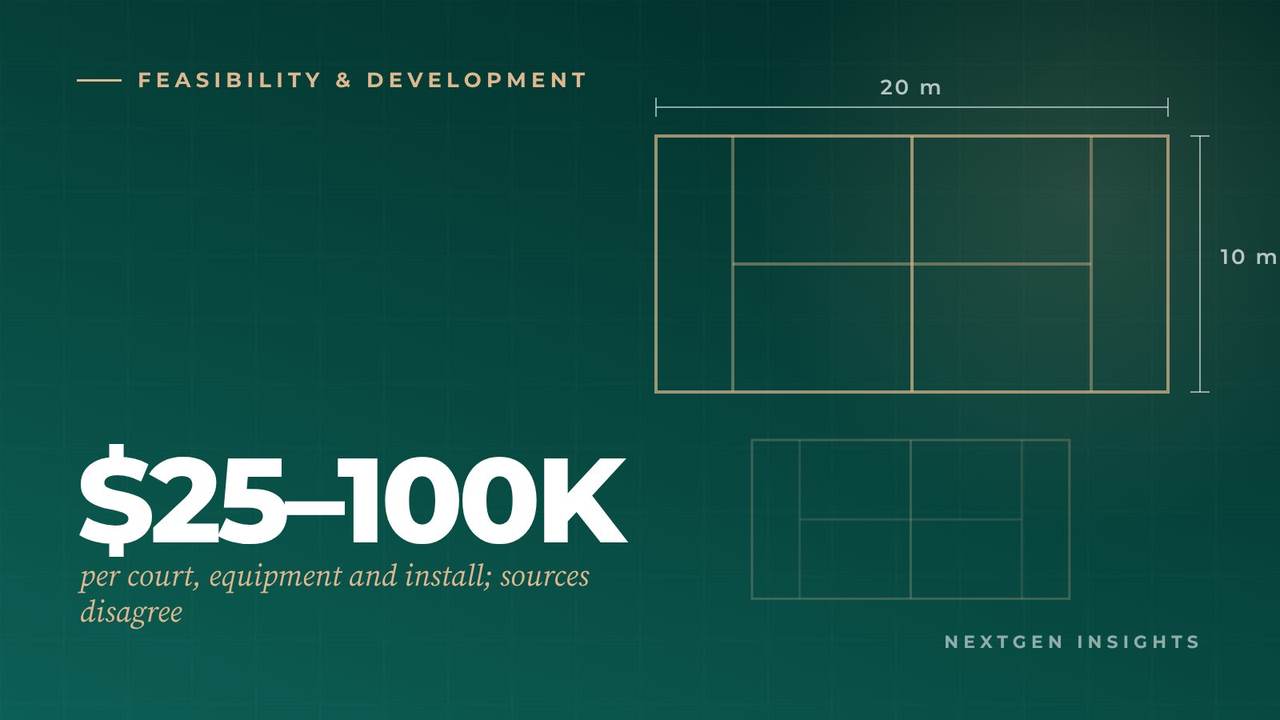
The courts are the visible part of the investment, and published estimates vary widely: roughly $25,000 to $100,000 per court for equipment and installation, with indoor courts including a building at $70,000–$100,000 or more, depending on the source. The surprises come from everything around them: site work (one guide puts ground and foundation at up to 40% of a single outdoor court’s cost), electrical service, permits, lighting, clubhouse fit-out, technology, insurance and pre-opening costs. A budget without contingency and working capital for the ramp-up is incomplete. Fix: build bottom-up from quotes, add contingency and separate pre-opening from ramp-up funding. See our cost guide.
3. Copying a concept that does not fit the market
Playtomic reports that the U.S. has the highest average padel booking price among the markets it tracks (about €92, roughly $100, per session), alongside high rents and import costs. Models built on high volume at low prices in Europe do not transfer unchanged. Climate, income, local sports culture and competition also change what players want. Fix: adapt the concept to the catchment; test pricing with local data. See Europe vs. the U.S.
4. Building into an oversupplied catchment
National growth does not protect a local club. Playtomic’s report documents Chile’s boom and retrenchment: clubs rose from 148 to 198 and courts from 570 to 788 between 2022 and 2023; major operators’ reservations later fell by 27% month on month during January to November 2024 and more than 80 clubs closed. Sweden and Finland show similar post-boom dynamics, with Finland’s commercial clubs at about 41% peak utilization. Fix: count courts and bookings in your catchment and in the pipeline, not just national totals. See choosing a market.
5. Signing a lease before approvals and with weak terms
Paying rent while waiting for permits is a common and avoidable loss. Padel Browser notes that permits “can add weeks or months” on top of four to eight weeks of assembly, and one operator told the National Association of Realtors that construction approval can take at least 24 months in some retail conversions. Personal guarantees, restoration obligations and exclusive-use clauses add risk. Fix: tie rent commencement to permits, cap guarantees and negotiate allowances. See lease negotiation.
6. Treating the opening as the finish line
Opening day is the start of the business. Projects that plan only the build often lack a plan for hiring, programming, pricing, marketing and community. SFIA data show why this matters: of 1.07 million Americans who played padel in 2025, only 238,000 played eight or more times. Most of your early customers are beginners who must be converted into regulars. Fix: build the operating and launch plan alongside the construction plan. See building community and events and sponsorships.
7. Relying on court rental alone
Court time is the core product, but clubs with a single revenue line are exposed to weather, seasonality and slow weeks. Playtomic’s survey shows 90% of top clubs offer services beyond court access, and facility or wellness access is the highest-yielding category for clubs that offer it. The opposite error is also costly: adding amenities nobody uses. Fix: add lines in sequence, once the court business is stable. See revenue beyond court rental.
8. Skipping the operator question
Who will actually run the club? Playtomic finds top clubs earn about €3,531 per court per month versus €736 for bottom clubs, a fivefold difference within the same markets, driven by operating choices such as price per hour, online booking, open matches and programming. A strong operator can rescue an average site; a weak one can sink an excellent one. Fix: decide early whether to self-operate, hire, outsource or use fractional executive support. See operating models.
9. No plan for slower-than-expected ramp-up
Every opening has a ramp-up. If debt service and rent assume the optimistic case, a slow first year becomes a crisis. Fix: model a slower start, keep a liquidity reserve and decide in advance which levers you would pull: pricing, programming, marketing, costs or timing. Size debt to the conservative case. See financing.
The common thread
Almost all of these mistakes come from moving fast on enthusiasm and slowly on evidence. An independent review before major commitments costs a small fraction of the cost of fixing the problems afterward. Our free feasibility checklist covers the questions above, and our owner representation service puts an experienced advocate on your side through design, procurement and opening.
Fuentes
- PADEL1969: Global Padel Report 2026 summary (Playtomic–Strategy&: Chile, Finland, top vs. bottom clubs, services survey).
- Padel Browser: How much does it cost to build a padel court? (2026).
- Sports Venue Calculator: Padel court construction cost guide (2026).
- Padel Browser: Padel growth in the United States, 2026 (average booking price).
- USPA: Padel surpasses one million players (SFIA 2026 report).
- NAR REALTOR Magazine: Pickleball courts serve an ace for vacant malls and retail stores (2023).